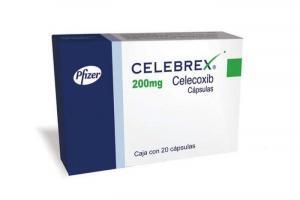
 Brand Name Drug: Celebrex
Active Ingredient Drug: celecoxib
Indication: Newest indication is for patients with familial adenomatous polyposis; also indicated for osteoarthritis and rheumatoid arthritis
Company Name: Searle and Pfizer Inc
Availability: Approved by FDA for familial adenomatous polyposis on December 23, 1999
The formation of hundreds or even thousands of potentially malignant adenomatous polyps in the colon and rectum, which usually initially show in adolescence and early adulthood, is the hallmark of the genetic condition known as familial adenomatous polyposis (FAP). By the time patients are 40 or 50 years old, almost all FAP patients have colon cancer if they are not treated. The cornerstones of care for these individuals are endoscopic monitoring and, when required, surgery.
Celebrex, also known as celecoxib and produced by Searle and Pfizer, is now the first medication ever licensed for the treatment of FAP. Celebrex is now recommended for the treatment of people with FAP in addition to being accessible for patients with rheumatoid arthritis and osteoarthritis. This medication functions through COX-2 enzyme inhibition. For patients with FAP, a dose of 400 mg twice daily is advised. Celebrex is intended to be used in addition to the standard endoscopic surveillance and procedures that FAP patients already get.
In December 1998, the FDA approved celecoxib, known as Celebrex from Pfizer/Astellas, for treating OA and rheumatoid arthritis. In 2000, the drug was introduced in Europe. Pfizer's marketing of this agent serves all of the research countries except Japan, where it is being guided through clinical development by Astellas Pharma (previously Yamanouchi Pharmaceuticals, which merged with Fujisawa Pharmaceuticals on April 1, 2005, to form Astellas Pharma).
In December 2002, a new drug application (NDA) was filed in Japan to treat pain and other symptoms associated with OA and rheumatoid arthritis. Approval is anticipated in 2004. However, the application was still being reviewed when this article was written. In October 2001, the FDA approved celecoxib for the treatment of acute pain and primary dysmenorrhea. It is also recognized as an additional treatment for familial adenomatous polyposis (FAP) in both the US and Europe. With these modifications, celecoxib now has the widest variety of authorized uses of any selective COX-2 inhibitor. Additionally, the drug is being explored for additional indications, including prostate and pancreatic tumors. In the US, patent coverage lasts until the end of 2013, and in the other nations under consideration, it lasts until the end of 2014.
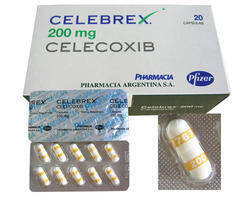 Mechanism of Action and Research Findings
The exact mechanism of action as all selective COX-2 is used by celecoxib.
Celecoxib has been the subject of multiple trials, the main goals of which have been to demonstrate its increased GI safety and demonstrate that its efficacy in treating OA and rheumatoid arthritis is comparable to that of other NSAIDs. Celecoxib at doses of 100, 200, and 400 mg twice daily was found to have significantly better efficacy than placebo and similar efficacy to traditional NSAIDs, namely, naproxen 500 mg twice daily or diclofenac slow release 75 mg twice daily. These three large clinical trials combined involved over 2,000 patients.
Like the VIGOR trial for rofecoxib, Pfizer established the Celecoxib Long-Term Arthritis Safety Study (CLASS) to demonstrate statistically meaningful evidence that celecoxib causes fewer GI side events than conventional NSAIDs. 8,059 individuals with OA and rheumatoid arthritis were randomly assigned to receive either celecoxib 800 mg, ibuprofen 2,400 mg, or diclofenac 150 mg daily in the double-blind, randomized CLASS study, which lasted for a year. The celecoxib dosage used was twice the maximum approved dose for rheumatoid arthritis and four times the recommended amount for osteoarthritis.
Patients were permitted to take aspirin concurrently to prevent cardiovascular disease. The incidence of symptomatic upper gastrointestinal ulcers and ulcer complications served as the primary end measures. According to a preliminary six-month review, the celecoxib-treated group saw considerably fewer upper gastrointestinal occurrences than the NSAID-treated groups. Pfizer asked the FDA to update the celecoxib label in light of these findings. Nevertheless, a year's worth of data revealed that celecoxib's impact on the predetermined GI endpoints was the same as that of conventional NSAIDs. On the other hand, those receiving celecoxib who were not taking aspirin might have seen fewer GI problems. The FDA concluded that there was no safety benefit in upper gastrointestinal events for CLASS as compared to other NSAIDs and that the standard warning of GI ulceration, bleeding, and perforation that is associated with all NSAIDs should still be included on the label for celecoxib.
As indicated in the summary of selective COX-2 inhibitors, there are worries that celecoxib can raise the risk of serious cardiovascular events. According to a meta-analysis of data from four randomized studies, including CLASS, including over 18,000 participants, patients receiving celecoxib had a considerably more significant risk of cardiovascular events compared to those receiving a placebo. The trial known as the Data Safety Monitoring Board for the Prevention of Sporadic Colorectal Adenomas with Celecoxib (APC) trial was advised to be suspended in December 2004 due to interim data that showed, at 33 months, that patients treated with celecoxib (200 or 400 mg twice daily) had a higher risk of serious cardiovascular events, such as myocardial infarction, stroke, and death, than patients treated with a placebo.
Celecoxib use was linked to a dose-related increase in cardiovascular risk, as evidenced by the frequency of adverse cardiovascular events in this trial, which was 7 of 679 patients in the placebo group, 16 of 685 patients in the 200 mg celecoxib group, and 23 of 671 patients in the 400 mg celecoxib group (corresponding to hazard ratios of 1.0, 2.3, and 3.4, respectively). The Prevention of Colorectal Sporadic Adenomatous Polyps Trial (PreSAP) and ADAPT were both halted in reaction to the APC data, even though the studies' results showed no higher cardiovascular risk in patients receiving celecoxib compared to placebo. Nonetheless, compared to placebo or conventional NSAIDs, celecoxib does not appear to raise cardiovascular risk in the majority of epidemiological investigations and clinical trials that last up to a year. While there is a chance of unfavorable cardiovascular events with celecoxib, it is much smaller than with rofecoxib.
The FDA has advised doctors to assess the risk-benefit ratio of celecoxib in individual patients and, if continued use is deemed appropriate, to use the lowest effective dose for the shortest amount of time, pending further analysis of the trial data and the dosages used (FDA Alert, December 2004). Regulatory bodies elsewhere have advised against using celecoxib in individuals with known heart disease or those who are highly susceptible to cardiovascular or cerebrovascular events, instead reserving it for those who are at risk for GI problems.
What the Patient Should Know
The most typical adverse effects of Celebrex include dyspepsia, diarrhea, and stomach pain. Celebrex, like any other NSAID, may result in gastrointestinal bleeding, especially in people who are taking warfarin or have bleeding problems. As a result, patients should be informed about the warning signs and symptoms of this kind of bleeding and encouraged to get help as soon as possible. Additionally, patients should notify their healthcare providers of any skin rash, edema, or unexplained weight gain.
Celebrex (celecoxib) should not be taken by anyone who has a known allergy to sulfonamides, aspirin, or other NSAIDs, significantly if they may develop aspirin-sensitive asthma. Given that some Celebrex users have reported fluid retention and edema, patients with hepatic or renal impairment, as well as those with hypertension or heart failure, should use the medication with caution. Lithium, ACE inhibitors, furosemide, fluconazole, and Celebrex may interact. Patients who use these medications should let their doctors know.