 What Is Pepcid?
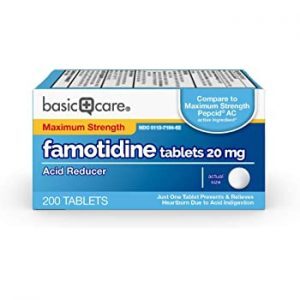
A medicine used to treat disorders associated with excessive stomach acid production is called Pepcid, also known as Famotidine. It is a member of the H2 blocker medication class, which lessens the quantity of acid the stomach generates. Famotidine is frequently recommended for the treatment of peptic ulcers, heartburn, and gastroesophageal reflux disease (GERD). Its effects usually last many hours when taken orally as a pill or intravenous drug. Even though they are usually well tolerated, following your doctor's recommendations and being aware of any potential adverse effects or interactions with other medications is important.
Pharmacokinetics
The gastrointestinal tract quickly absorbs Famotidine, but incompletely; plasma concentrations peak one to three hours after oral dosages. Oral Pepcid has a bioavailability of 40-45%. According to reports, the elimination half-life of plasma is three hours, and it is extended in cases of renal impairment. Famotidine binds to plasma proteins with a strength of 15-20%. A small amount of Pepcid is converted to Famotidine S-oxide in the liver. Within 24 hours, 25-30% of an oral dose and 65-70% of an intravenous dose are eliminated intact in the urine, mostly by active tubular secretion. Breast milk also contains Pepcid.
Uses
| Condition/Treatment |
Dosage |
Duration |
Route |
| Benign gastric and duodenal ulcerations |
40 mg at bedtime |
4-8 weeks |
Oral |
| |
20 mg twice daily |
|
Oral |
| |
Maintenance: 20 mg at bedtime |
Prevent recurrence |
Oral |
| Gastro-oesophageal reflux disease |
20 mg twice daily |
6-12 weeks |
Oral |
| |
Up to 40 mg twice daily (oesophageal ulceration) |
|
Oral |
| |
Maintenance: 20 mg twice daily |
Prevent recurrence |
Oral |
| Non-ulcer dyspepsia or heartburn |
Up to 10 mg twice daily |
Temporary relief |
Oral |
| Zollinger-Ellison syndrome |
20 mg every 6 hours, increased as needed |
Up to 800 mg daily |
Oral |
| |
|
|
|
| Intravenous |
20 mg |
Every 12 hours |
Intravenous |
| |
|
|
|
| Renal Impairment |
Lower doses as per physician guidance |
|
Patients with renal impairment should have lower doses of Famotidine.
While Famotidine is often administered as a film-coated tablet, a different wafer formulation has also been created that dissolves on the tongue without water.
In certain countries, parenteral famotidine formulations are also accessible. A study that compared quick intravenous injection (over a maximum of one minute) versus delayed intravenous infusion found both to be safe, despite the licensed product information's recommendation that intravenous injections be administered for at least two minutes. Others, however, claim that continuous infusion prevents stress ulceration more successfully than bolus injection.
 Renal Impairment
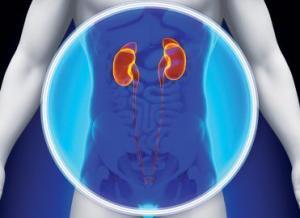
Patients with renal impairment should receive a lower dosage of Pepcid. In the UK, a 50% reduction is advised for patients whose creatinine clearance is less than 10 mL/minute. In the USA, the lower dosage is advised for everyone whose creatinine clearance is less than 50 mL/minute. Alternatively, you could extend the dosing interval to 36 or 48 hours.
Side Effects
Famotidine, in contrast to Cimetidine, has little to no anti-androgenic impact despite sporadic reports of impotence and gynecomastia.
Impacts on the Heart and Circulatory System
Oral ranitidine (40 mg) decreases cardiac output and stroke volume in healthy subjects compared to placebo, Cimetidine, or ranitidine. Ritina's pretreatment postponed similar effects to those observed in different studies. However, another study discovered that Pepcid 20 mg intravenously had no effect on any hemodynamic parameters assessed in 11 critically ill patients and that Famotidine oral had no effect on exercise capacity or left ventricular systolic function in healthy participants. Famotidine has been linked to bradycardia, AV block, and QT prolongation, just like other H2 antagonists.
The Endocrine System's Impact
One woman had hyperprolactinemia and breast engorgement in the fourth month of using 80 mg of Famotidine per day. Erroneously, she had received twice the recommended maximum dosage. Withdrawing Famotidine led to recovery. There have also been reports of a lady experiencing transient hyperprolactinemia and galactorrhea following standard doses of Famotidine (40 mg daily). A few people have experienced impotence.
Impacts on the Renal System
See under Cimetidine for a discussion of acute interstitial nephritis linked to H2-antagonists, such as Famotidine.
Impacts on the Liver
The usage of Pepcid has been linked to acute hepatitis and mixed hepatocellular jaundice. In the latter instance, after the patient started using Cimetidine, the hepatitis later returned.
The Nervous System's Impact
Like other H2 antagonists, Pepcid has also been associated with CNS responses, especially in older people and those suffering from renal failure. In one study, significantly high medication concentrations in the CSF and plasma of two elderly individuals suffering from renal failure were linked to convulsions and mental decline; the symptoms went away three days after Pepcid was stopped. Famotidine use was linked to delirium in an older patient with renal impairment, although Cimetidine did not cause this condition.
Effects on the Skin
There have been reports of erythema multiforme or toxic epidermal necrolysis following Pepcid use.
High Temperature
A patient who had suffered facial and cerebral damage was found to have hyperpyrexia after receiving 20 mg of metronidazole intravenously every 12 hours. Despite using antipyretics, the rectal temperature was 40.5° in the 24 hours following the initiation of famotidine treatment and stayed high for the five days of the medication. The patient's temperature returned to normal within 24 hours of stopping Pepcid.
 Interactions
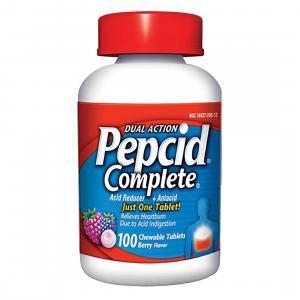
In contrast to Cimetidine, Pepcid does not inhibit cytochrome P450, so it is thought to have minimal impact on the metabolism of other medications. Like other H2 antagonists, though, its effects on stomach pH may impact other medications' absorption.
Antacids
When 10-mL doses of an antacid comprising 800 mg aluminum hydroxide and 800 mg magnesium hydroxide were given to patients taking Pepcid 40 mg, Famotidine's bioavailability decreased insignificantly. The absorption of Famotidine from the gastrointestinal tract was significantly reduced when Famotidine was given with a 30-mL dosage of the same antacid. However, the interaction might be reduced if intake was spaced out by two hours.
Probenecid
In eight healthy people, probenecid at a total dose of 1500 mg significantly affected the pharmacokinetics of Pepcid at a dose of 20 mg. Renal clearance was significantly decreased, while the maximum serum concentration of Famotidine and the area under the concentration/time curve showed considerable increases.
Probenecid's inhibition of Famotidine's renal tubular secretion accounted for these results.
Theophylline
Even though Pepcid is thought not to affect how other medications are metabolized, a clinically noteworthy interaction with theophylline has been reported.
Kids
To prevent aspiration, 10 children between the ages of 2 and 7 received 300 micrograms/kg of Pepcid intravenously during heart surgery but before extubation. The intragastric pH rose in just one hour after this dose (about 20 mg in adults), and it stayed above 3.5 for almost nine hours. Given that the mean elimination half-life of 3.3 hours was comparable to that of healthy adults, it was determined that dosage adjustments for children should only be made based on body weight and renal function.
A study of eight research including children older than one year provided evidence for this result. On the other hand, because of decreased renal clearance, babies between the ages of 5 and 19 days had a longer mean elimination half-life (10.5 hours). Another study supported this by showing that newborns under three months had lower clearance, while older infants' pharmacokinetics matched those previously described for adults and children.
Breastfeeding
Eight women's breast milk famotidine peak concentrations occurred six hours after an oral 40 mg dose and resembled the peak plasma levels two hours later.
Hepatic Enterocirculation
Enterohepatic recirculation may cause a second peak in the plasma levels of Famotidine observed in some individuals. However, after single doses of 20 mg intravenously or 40 mg orally, a maximum of 0.43% of a famotidine dose was excreted in the bile of 2 patients, suggesting that considerable recirculation had not occurred.