Generic Drug: Esomeprazole
Gastrointestinal Drugs
Brand Name Drug: Nexium
Active Ingredient Drug: esomeprazole magnesium
Indication: Treatment of gastroesophageal reflux disease
Company Name: AstraZeneca Pharmaceuticals
Availability: Nexium received approval for use in Sweden in March 2000; USA - February 20, 2001
 Introduction
Nearly 60 million Americans experience symptoms of gastroesophageal reflux disease (GERD), a chronic condition in which stomach acids bubble up into the esophagus, causing the feeling more commonly known as heartburn. If left uncontrolled, GERD can progress to more severe complications, including bleeding, precancer, and esophageal cancer. A class of drugs called 'proton pump inhibitors' (PPIs), introduced in the late 1980s, has vastly improved the treatment of GERD.
Prilosec (omeprazole), the PPI most commonly prescribed for GERD, may soon be overtaken by an even better drug. New studies reported at the Digestive Disease Week meeting in San Diego in May 2000 indicate that Nexium (esomeprazole magnesium) is superior to Prilosec for healing erosive esophagitis - one of the most severe forms of GERD - and resolving heartburn in these patients. Nexium, a chemical cousin of Prilosec, is the first PPI to demonstrate this level of effectiveness.
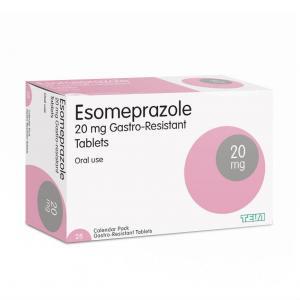
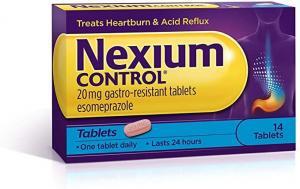
Like many other drugs in its class, Nexium is easy to take: just one 40 mg delayed-release tablet once a day. It works by interfering with a key enzyme system involved in stomach acid production.
AstraZeneca Pharmaceuticals manufactures both Nexium and Prilosec. The US Food and Drug Administration is currently evaluating Nexium.
Clinical Study Results
One US study, led by Dr. Peter J. Kahrilas and his colleagues, compared the effectiveness of 40 mg/day and 20 mg/day of Nexium to 20 mg/day of Prilosec in 1,960 patients with erosive esophagitis. The drugs were taken for eight weeks. At weeks 4 and 8, more patients taking Nexium experienced healing than those who took Prilosec; more Nexium patients reported resolution of heartburn in less time.
Another trial, conducted at 163 US centers and led by Dr. Joel E. Richter, compared 40 mg/day of Nexium with 20 mg/day of Prilosec in 2,425 patients with erosive esophagitis treated for eight weeks. Nexium produced increased healing and better resolution of heartburn and regurgitation than Prilosec at weeks 4 and 8.
Pharmacokinetics
Esomeprazole is rapidly absorbed after oral doses, with peak plasma levels occurring within 1 to 2 hours. It is acid-labile, and an enteric-coated formulation has been developed. The bioavailability of esomeprazole increases with both dose and repeated administration to about 68 and 89% for doses of 20 and 40 mg, respectively.
Food delays and decreases the absorption of esomeprazole, but this does not significantly change its effect on intragastric acidity. Esomeprazole is about 97% bound to plasma proteins. It is extensively metabolized in the liver by the cytochrome P450 isoenzyme CYP2C19 to hydroxy and desmethyl metabolites, which do not affect gastric acid secretion.
The remainder is metabolized by the cytochrome P450 isoenzyme CYP3A4 to esomeprazole sulfone. With repeated dosage, there is a decrease in first-pass metabolism and systemic clearance, probably caused by an inhibition of the CYP2C19 isoenzyme. However, there is no accumulation during one day of daily use. The plasma elimination half-life is about 1.3 hours. Almost 80% of an oral dose is eliminated as metabolites in the urine, the remainder in the feces.
Metabolism
As for omeprazole, the cytochrome P450 isoenzyme CYP2C19 is involved in the metabolism of esomeprazole, and individuals deficient in this enzyme are poor metabolizers of esomeprazole. However, there is a suggestion that the metabolism of esomeprazole is less dependent on this genotype, as there may be a metabolic shift towards the CYP3A4-mediated pathway.
Uses and Administration
Esomeprazole is the S-isomer of the proton pump inhibitor omeprazole and is used similarly in the treatment of peptic ulcer disease and NSAID-associated ulceration, in gastro-oesophageal reflux disease, and the Zollinger-Ellison syndrome. It is given as magnesium or sodium salt, but doses are calculated regarding esomeprazole. Esomeprazole magnesium 22.2 mg and esomeprazole sodium 21.3 mg are each equivalent to about 20 mg of esomeprazole.
Usual doses for peptic ulcer disease, as a component of a triple therapy regimen with amoxicillin and clarithromycin, are the equivalent of 20 mg esomeprazole orally twice daily for seven days or 40 mg once daily for ten days.
Oral doses of 20 mg daily for 4 to 8 weeks treat NSAID-associated ulceration. A dose of 20 mg daily may also be used for prevention in patients at risk of such lesions who require continued NSAID treatment.
In the UK, the dose for treating severe (erosive) gastro-oesophageal reflux disease is 40 mg once daily for four weeks, extended for four weeks if necessary. In the USA, where doses of 20 or 40 mg daily are permitted for initial treatment, a further 4 to 8 weeks of treatment may be considered for patients who do not heal after 4 to 8 weeks. For maintenance or symptomatic disease without erosive oesophagitis, doses equivalent to 20 mg of esomeprazole daily may be used in both countries.
For the treatment of Zollinger-Ellison syndrome, the recommended initial oral dose of esomeprazole is 40 mg twice daily, which is then adjusted as needed. Most patients can be controlled on doses between 80 and 160 mg daily, although 240 mg has been given. Doses above 80 mg daily should be given in 2 divided doses.
Parental Dosage
Similar doses to the above may be given intravenously for gastro-oesophageal reflux disease and NSAID-associated ulceration. Esomeprazole is given as sodium salt by slow intravenous injection over at least 3 minutes or by intravenous infusion over 10 to 30 minutes.
Doses of esomeprazole may need to be reduced in patients with hepatic impairment (see below).
Administration
In-vitro studies found that almost all the contents of an esomeprazole capsule are deliverable through small and standard sizes of nasogastric and gastrostomy tubes.
 Administration in Children
UK-licensed product information allows for adult doses of esomeprazole (see Uses and Administration section) in children over 12 years. In the USA, licensed doses, which may be given once daily for up to 8 weeks for the treatment of gastro-oesophageal reflux in children, are:
- 1 to 11 years: 10 mg;
- 12 to 17 years: 20 or 40 mg.
For healing erosive oesophagitis in children, the following doses based on body weight are licensed in the USA to be given once daily for up to 8 weeks:
- less than 20 kg - 10 mg;
- 20 kg or over - 10 or 20 mg.
Administration in Hepatic Impairment
Esomeprazole dosage adjustment is not necessary for patients with mild to moderate hepatic impairment (Child-Pugh Classes A and B, respectively). However, a daily dose of 20 mg should not be exceeded for patients with severe hepatic impairment (Child-Pugh Class C).
Administration in Renal Impairment
Although no dosage adjustment is considered necessary in patients with renal impairment, UK-licensed product information advises caution in those with severe renal impairment, as experience in these patients is limited.
Adverse Effects
The most common side effects reported by patients taking Nexium were headache, abdominal pain, and diarrhea - symptoms comparable to those reported by patients taking other types of PPIs.
For millions of people worldwide suffering from gastrointestinal problems, Nexium is a reliable solution. Its powerful composition and solid scientific support have made it a leading treatment for ailments like ulcers and acid reflux. As usual, seeking individualized advice from medical specialists regarding its administration and any adverse effects is crucial to guarantee the best possible relief and overall health for individuals who depend on this drug.