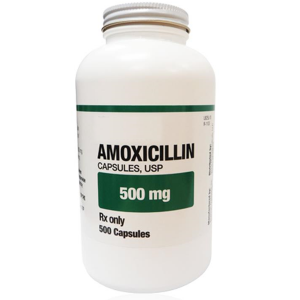
 Co-amoxiclav (Amoxicillin and Clavulanic Acid)
Augmentin is an antibiotic that kills bacteria that cause infections. It contains two different medicines: amoxicillin and clavulanic acid. Amoxicillin belongs to a group of medicines called 'penicillins' that can sometimes be stopped from working (made inactive). The other active component (clavulanic acid) stops this from happening.
Augmentin is used in babies and children to treat the following infections:
- middle ear and sinus infections;
- respiratory tract infections;
- urinary tract infections;
- skin and soft tissue infections, including dental infections;
- bone and joint infections.
Do Not Give Your Child Augmentin:
- if they are allergic (hypersensitive) to amoxicillin, clavulanic acid, or any of the other ingredients of Augmentin;
- if they have ever had a severe allergic (hypersensitive) reaction to any other antibiotic. This can include a skin rash or swelling of the face or neck;
- if they have ever had liver problems or jaundice (yellowing of the skin) when taking an antibiotic.
Do not give Augmentin to your child if any of the above apply to your child.
If you need more clarification, talk to their doctor or pharmacist before giving Augmentin.
Take Special Care with Augmentin
Check with their doctor or pharmacist before giving your child this medicine if they:
- have a glandular fever;
- are being treated for liver or kidney problems;
- are not passing water regularly.
If you are unsure if any of the above apply to your child, talk to their doctor or pharmacist before giving Augmentin.
Sometimes, your doctor may investigate the type of bacteria causing your child's infection. Depending on the results, your child may be given a different strength of Augmentin or a different medicine.
Precautions
Augmentin can make some existing conditions worse or cause serious side effects. These include allergic reactions, convulsions (fits), and inflammation of the large intestine. You must look out for specific symptoms while your child is taking Augmentin to reduce the risk of any problems.
Blood or Urine Tests
If your child has blood tests (such as red blood cell status tests or liver function tests) or urine tests, let the doctor or nurse know they are taking Augmentin. This is because Augmentin can affect the results of these types of tests.
Using Other Medicines
Please tell your doctor or pharmacist if your child has recently taken other medicines. This includes medicines that can be bought without a prescription and herbal medicines.
If your child is taking allopurinol (used for gout) with Augmentin, it may be more likely that they will have an allergic skin reaction.
If your child is taking probenecid (used for gout), your doctor may decide to adjust the dose of Augmentin.
If medicines to help stop blood clots (such as warfarin) are taken with Augmentin, then extra blood tests may be needed.
Augmentin can affect how methotrexate (a medicine used to treat cancer or rheumatic diseases) works.
Pregnancy and Breastfeeding
If your child who is about to take this medicine is pregnant or breastfeeding, please tell your doctor or pharmacist.
Ask your doctor or pharmacist for advice before taking any medicine.
Important Information About Some of the Ingredients of Augmentin
Augmentin contains aspartame (E951), which is a source of phenylalanine. This may be harmful to children born with a condition called 'phenylketonuria.'
Augmentin contains maltodextrin (glucose). If your doctor has told you that your child has an intolerance to some sugars, contact your doctor before taking this medicinal product.
Always give Augmentin precisely as your doctor has told you. If you need more information, check with your doctor or pharmacist.
Adults and Children Weighing 40 kg or Over
This suspension is not usually recommended for adults and children weighing 40 kg and over. Ask your doctor or pharmacist for advice.
Children Weighing Less Than 40 kg
All doses are worked out depending on the child's body weight in kilograms.
Your doctor will advise you how much Augmentin you should give your baby or child.
You may be provided with a plastic measuring spoon or measuring cup. You should use this to give your baby or child the correct dose.
The usual dose is 20 mg/5 mg to 60 mg/15 mg daily for each kilogram of body weight, given in three divided doses.
Patients with Kidney and Liver Problems
- If your child has kidney problems, the dose might be lowered. Your doctor may choose a different strength or a different medicine.
- If your child has liver problems, they may need more frequent blood tests to see how their liver is working.
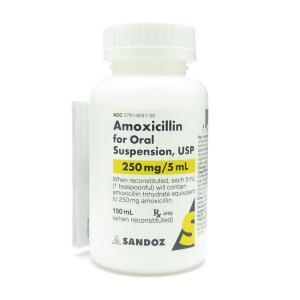 How to Give Augmentin
Always shake the bottle well before each dose.
Give at the start of a meal or slightly before.
Divide the doses evenly during the day, at least 4 hours apart. Do not take 2 doses in 1 hour.
Do not give your child Augmentin for more than 2 weeks. If your child still feels unwell, they should see the doctor again.
If You Gave More Augmentin Than You Should
If you give your child too much Augmentin, signs might include an upset stomach (feeling sick, being sick, or diarrhea) or convulsions. Talk to their doctor as soon as possible. Take the medicine bottle to show the doctor.
If You Forget to Give Augmentin
If you forget to give your child a dose, give it as soon as you remember. You should not give your child the next dose too soon; wait about 4 hours before giving the next dose.
If Your Child Stops Taking Augmentin
Keep giving your child Augmentin until the treatment is finished, even if they feel better. Your child needs every dose to help fight the infection. If some bacteria survive, they can cause the infection to come back.
Ask your doctor or pharmacist for further questions about using this product.
Like all medicines, Augmentin can cause side effects, although not everybody gets them. The side effects below may happen with this medicine.
Side Effects
Conditions You Need to Be Aware
Allergic Reactions:
- skin rash;
- inflammation of blood vessels (vasculitis), which may be visible as red or purple raised spots on the skin but can affect other parts of the body;
- fever, joint pain, swollen glands in the neck, armpit, or groin;
- swelling, sometimes of the face or mouth (angioedema), causing difficulty in breathing;
- collapse.
Contact a doctor immediately if your child gets any of these symptoms. Stop taking Augmentin.
Inflammation of the Large Intestine
Inflammation of the large intestine causes watery diarrhea, usually with blood and mucus, stomach pain, and/or fever. If your child develops these symptoms, contact your doctor immediately for advice.
Very Common Side Effects
These may affect more than 1 in 10 people - diarrhea (in adults).
Common Side Effects
- These may affect up to 1 in 10 people;
- thrush (Candida - a yeast infection of the vagina, mouth, or skin folds);
- feeling sick (nausea), especially when taking high doses, if affected, take Augmentin before food;
- vomiting;
- diarrhea (in children).
Uncommon Side Effects
These may affect up to 1 in 100 people:
- skin rash, itching;
- raised itchy rash (hives);
- indigestion;
- dizziness;
- headache.
Uncommon Side Effects That May Show Up in Blood Tests
- increase in some substances (enzymes) produced by the liver.
Rare Side Effects
These may affect up to 1 in 1000 people:
- skin rash may blister and look like small targets (central dark spots surrounded by a paler area, with a dark ring around the edge - erythema multiforme).
If you notice any of these symptoms, contact a doctor immediately.
Rare Side Effects That May Show Up in Blood Tests
- low number of cells involved in blood clotting;
- low number of white blood cells.
Other Side Effects
Other side effects have occurred in a minimal number of people, but their exact frequency is unknown:
- allergic reactions (see above);
- inflammation of the large intestine (see above);
- serious skin reactions:
- a widespread rash with blisters and peeling skin, particularly around the mouth, nose, eyes, and genitals {Stevens-Johnson syndrome), and a more severe form, causing extensive peeling of the skin (more than 30% of the body surface - toxic epidermal necrolysis);
- widespread red skin rash with small pus-containing blisters {bullous exfoliative dermatitis);
- a red, scaly rash with bumps under the skin and blisters (exanthemouspustulosis).
Contact a doctor immediately if your child gets any of these symptoms.
- inflammation of the liver (hepatitis);
- jaundice caused by increases in the blood of bilirubin (a substance produced in the liver), which may make your child's skin and the whites of the eyes appear yellow;
- inflammation of tubes in the kidney;
- blood takes longer to clot;
- hyperactivity;
- convulsions (in people taking high doses of Augmentin or who have kidney problems);
- black tongue, which looks hairy;
- stained teeth (in children), usually removed by brushing.
Side Effects That May Show up in Blood or Urine Tests:
- severe reduction in the number of white blood cells;
- the low number of red blood cells (hemolytic anemia);
- crystals in urine.
If Your Child Gets Side Effects
- Tell your doctor or pharmacist if any side effects become severe or troublesome or if you notice any side effects not listed in this post.
- Keep out of the reach and sight of children.
- Do not use Augmentin after the expiration date stated on the carton. The expiry date refers to the last day of that month.
- The expiry date on the bottle label is for the pharmacist's use. The pharmacist will have made up your medicine. It should be used within 7 days.
- Store in the fridge, but do not freeze.
- Medicines should not be disposed of via wastewater or household waste. Ask your pharmacist how to dispose of medicines that are no longer required. These measures will help to protect the environment.
What Augmentin Contains
In every 5 ml of suspension, there are 125 mg of amoxicillin and 31.25 mg of clavulanic acid (present as potassium clavulanate).
The other ingredients are xanthan gum (E415), hydroxypropyl methylcellulose (E464), aspartame (see section 2), silicon dioxide, colloidal silica, succinic acid, raspberry, orange, and golden syrup flavors, and water.
What Augmentin Looks Like and Contents of the Pack
A suspension is a clear glass bottle containing 100 ml of an off-white liquid mixture. It is supplied in a carton.
Antibiotic Uses
Antibiotics are used to treat infections caused by bacteria. They do not affect infections caused by viruses.
Sometimes, an infection caused by bacteria does not respond to an antibiotic course. One of the most typical reasons for this is that the bacteria causing the infection are resistant to the antibiotic. This means that they can survive and even multiply despite the antibiotic.
Bacteria can become resistant to antibiotics for many reasons. That is why it is very important to follow your doctor's prescription.
When your doctor prescribes an antibiotic course, it is intended to treat only your current illness. Paying attention to the following advice will help prevent the emergence of resistant bacteria that could stop the antibiotic from working.
You must take the antibiotic at the correct dose, at the right times, and for the correct number of days. Read the instructions on the label, and if you do not understand anything, ask your doctor or pharmacist to explain.
You should not take an antibiotic unless it has been prescribed specifically for you, and you should use it only to treat the infection for which it was prescribed.
You should not take antibiotics prescribed for other people, even if they have an infection similar to yours.
You should not give antibiotics that were prescribed for you to other people.
If you have any antibiotic left over after taking the course as directed by your doctor, you should take the remainder to a pharmacy.
Augmentin successfully treats a wide range of bacterial illnesses. The special combination of clavulanic acid and amoxicillin increases its efficacy and prevents bacterial resistance. Augmentin is an important tool for healthcare providers globally since it has demonstrated efficacy and safety, enabling them to provide patients with the appropriate treatment they deserve.















 Belgium