I used dasatinib in a different form before. What dosage form do you sell?
We list dasatinib as 50 mg film-coated tablets for oral use. We do not list another dosage form for this product.


| Quantity | Price per bottle | You save | Total price | |
|---|---|---|---|---|
| 1 | C$108.24 | - | C$108.24 | |
| 2 | C$98.98 | C$18.51 | C$197.97 | |
| 3 | C$92.35 | C$47.67 | C$277.04 |
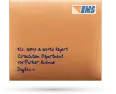
Your order is carefully packed and ships within 24 hours. Here's the typical package.
Sized like a regular personal letter (24x11x0.7 cm), with no indication of its contents.


| Shipping Method | Estimated delivery |
|---|---|
| Express Free for orders over C$420.61 | Estimated delivery to Canada: 4-7 days |
| Standard Free for orders over C$280.41 | Estimated delivery to Canada: 14-21 days |










| Country | Brand Names |
|---|---|
| Canada | Apo-Dasatinib |
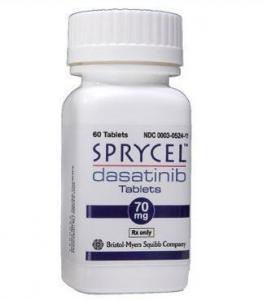 What Is Sprycel?
 Sprycel, also known as Dasatinib, is a drug used to treat acute lymphoblastic leukemia (Ph+ ALL) and chronic myeloid leukemia (CML), two cancers associated with the Philadelphia chromosome. It is a member of the tyrosine kinase inhibitor medication class, which inhibits specific proteins that encourage the growth of cancer cells. Dasatinib is usually recommended when a patient cannot accept alternative therapy or other treatments do not work. It is taken orally as prescribed by a healthcare provider and comes in tablet form. Sprycel, like all drugs, may have side effects. Patients should discuss any worries or symptoms with their healthcare team for appropriate management. Routine monitoring and follow-up consultations are crucial to evaluate the effectiveness of treatment and handle any potential consequences.
Sprycel reaches its maximum plasma concentrations between 30 minutes and 6 hours after an oral dose. There is an average terminal half-life of five hours. Eating a high-fat meal may raise the amount of Dasatinib exposed to the body, although this impact is not considered clinically significant. Sprycel is metabolized and distributed widely. The main enzyme involved in metabolism is cytochrome P450 isoenzyme CYP3A4, which produces an active metabolite. Dasatinib and its active metabolite bind to plasma proteins with a percentage of around 96% and 93%, respectively. Most elimination occurs in the feces, with the urine recovering roughly 4%.
Sprycel, a tyrosine kinase inhibitor, can be used to treat adults with all phases of chronic myeloid leukemia (CML) who have become resistant to or intolerable to prior therapy, including imatinib. It can also be used to treat adults with acute lymphoblastic leukemia (ALL) with Philadelphia chromosome positivity who are resistant to or intolerant of previous treatments.
For patients with chronic phase CML, an oral beginning dose of 100 mg once daily is advised. The tablets should be taken routinely in the morning or the evening and swallowed whole-not crushed or chewed. For patients with Philadelphia chromosome-positive, ALL or accelerated, myeloid, or lymphoid blast phase CML, a beginning dose of 70 mg twice a day is advised. Doses of up to 140 mg once daily have been used in patients with chronic phase CML and up to 200 mg twice daily in those with advanced phase or ALL. The dosage can be changed based on response and tolerability. The course of treatment is maintained until the condition worsens or there is intolerable toxicity.
Dosage changes are required if the concurrent use of strong inducers or inhibitors of the cytochrome P450 isoenzyme CYP3A4 cannot be avoided. Patients receiving potent CYP3A4 inducers may benefit from a dose increase, and their toxicity should be closely monitored. Sprycel dosages for patients receiving potent CYP3A4 inhibitors should be lowered to 20 mg daily. If this is not tolerated, either medication should be discontinued; if the inhibitor is removed, there should be a week-long washout before increasing the Sprycel dosage.
The most frequent side effects of Sprycel are bleeding, gastrointestinal problems, and fluid retention. Severe fluid retention can lead to ascites, pulmonary edema, pericardial and pleural effusion, and other complications.
There have been reports of severe CNS hemorrhages that can be fatal. It can be necessary to stop therapy and blood transfusions if there is intestinal bleeding.
Compared to those in the chronic phase, patients with advanced chronic myeloid leukemia (CML) or acute lymphoblastic leukemia are more likely to experience myelosuppression, which can present as neutropenia, thrombocytopenia, or anemia.
If a dose is interrupted or reduced, recovery usually follows; however, treatment may need to be discontinued.
There have been reports of febrile neutropenia. A double daily dosage is associated with a higher incidence of myelosuppression and fluid retention in patients with chronic phase CML compared to a once-daily dosage. Other side effects include headache, pyrexia, musculoskeletal discomfort, fatigue, skin rashes, dyspnea, cough, disorientation, chest pain, neuropathy, chills, and pruritus.
Reports of infections, including pneumonia, have surfaced. Arrhythmias and heart failure can happen.
Sprycel may cause the QT interval to lengthen. Patients who are at danger, such as those with hypokalaemia or hypomagnesemia, those undergoing antiarrhythmic therapy, or those taking cumulative high doses of anthracyclines, should take caution when administering it.
There have been reports of Parmiculitis with Sprycel, which went away when the medication was stopped. When prednisone was added back to Sprycel in one instance, there was no discernible recurrence of parmiculitis. On the other hand, a rash that was not responsive to corticosteroid treatment returned to another patient after they resumed their medication.
Sprycel is metabolized by the cytochrome P450 isoenzyme CYP3A4. As a result, medications that block this enzyme, such as nefazodone, HIV-protease inhibitors, macrolide antibacterials, and azole antifungals, may cause an increase in dasatinib blood level. Sprycel blood concentrations may also be lowered by CYP3A4 inducers, which include carbamazepine, dexamethasone, phenobarbital, phenytoin, and rifampicin. Sprycel dosage adjustments may be required while using such medications when it is not possible to prevent them (see Uses and Administration section). Combining St. John's wort with Sprycel may cause unpredictable drops in medication concentrations.
As a substrate of cytochrome P450 isoenzyme CYP3 A4, Sprycel may change the levels of other medications in the blood that are also substrates of this enzyme. The use of antacids with Dasatinib should be avoided since the drug's solubility depends on pH. If antacid medication is required, it must be administered at least two hours either before or after Dasatinib's dose. Similarly, as long-term restriction of gastric acid secretion is anticipated to diminish dasatinib exposure, histamine H2-receptor antagonists or proton pump inhibitors like omeprazole or famotidine should not be administered in conjunction with Dasatinib.

I used dasatinib in a different form before. What dosage form do you sell?
We list dasatinib as 50 mg film-coated tablets for oral use. We do not list another dosage form for this product.
My dasatinib package arrived in Barrie during a very cold spell. What should I check before taking the tablets?
Check that the bottle is intact and dry, the closure is secure, and the tablets have not changed in colour, texture, or appearance. Store them at 20°C to 25°C; excursions between 15°C and 30°C are permitted, but do not use the product if its condition or the extent of temperature exposure is uncertain.
I realized at bedtime that I missed my morning dasatinib dose. Should I take it now or take two tomorrow?
Do not take an extra dose to make up for a missed one. Skip the missed dose and take the next dose at the usual scheduled time; contact your treatment team if missed doses happen often.
| Active ingredient | Dasatinib |
|---|---|
| Drug class | BCR-ABL tyrosine kinase inhibitor |
| Dosage form | Film-coated tablets |
| Available strengths | 50 mg |
| Route | Oral |
| Storage | Store at 20°C to 25°C; excursions permitted between 15°C and 30°C. |
| ATC code | L01EA02 |
This product has 39 ratings, but only 6 written reviews so far. Share your experience and help other customers.
Everything went smoothly.
Ordering was easy to manage.
I checked the label: 50 mg and a pack of 3, as ordered.
Customs processing was straightforward, and no additional information was requested for the order for dasatinib.
A positive experience overall.
The outer packaging was pleasantly neutral for the Sprycel order.


